
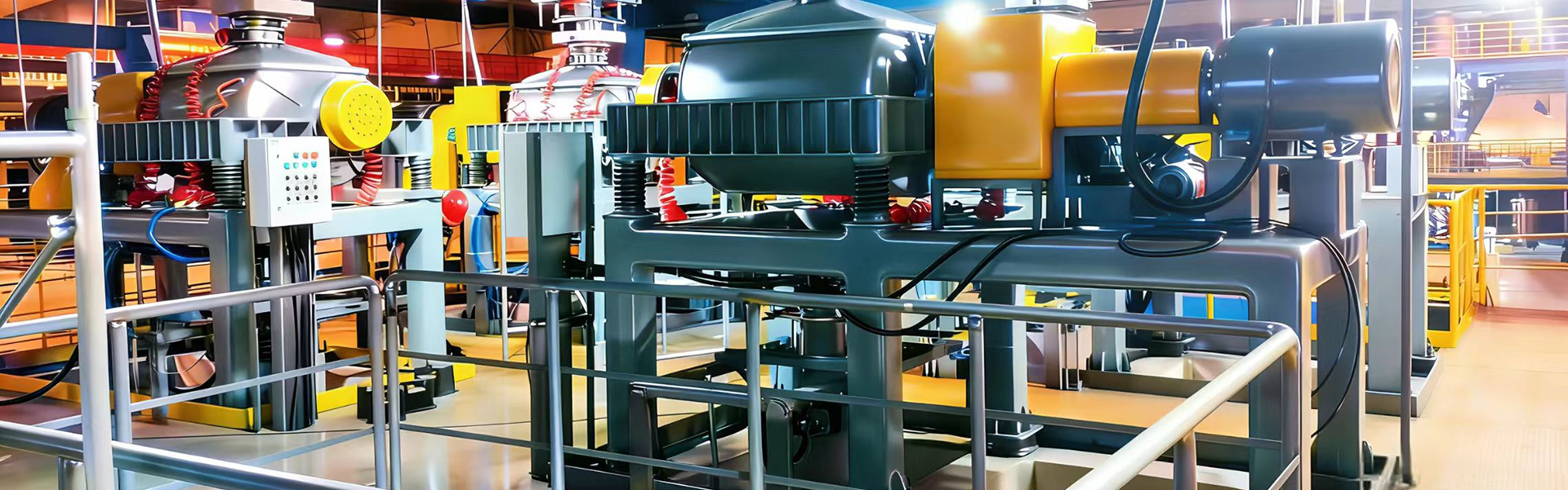
With the development of China's industry, the development of mixer equipment will become increasingly extensive. It has now become an important production equipment in industrial manufacturing.
The mixing methods also include gravity mixing and mechanical mixing. Self-flow mixing refers to the movement between materials, achieving uniform mixing through self-friction, while mechanical mixing refers to the uniform mixing of materials through mechanical forced action. General gas mixing is self-flow mixing, while the mixing in a three-dimensional mixer is a combination of self-flow mixing and mechanical mixing. All mixtures where the mixing containers do not move during the mixing process are mechanical mixtures.
The production of additive premixes by the mixer should follow the method of gradually expanding the stirring from trace mixing to small amount mixing, then to medium amount mixing, and finally to large amount mixing.
The correct sequence for adding materials to a mixer should be as follows: components with a large proportion should be added first or most of them should be added to the machine first, and then a small amount and trace components should be added on top of it. Among various materials, generally, components with larger particle sizes are added to the mixer first, followed by those with smaller particle sizes. When there is a significant difference in specific gravity among materials, it is generally the case that materials with a lower specific gravity are added first, followed by those with a higher specific gravity.
For fixed container mixers, the mixer should be started first before adding materials to avoid full-load start-up. Moreover, the machine can only be shut down after all materials have been discharged. For the rotary container mixer, materials should be added first and then started; it should be stopped first and then discharged. For V-type mixers, feeding should be done separately from the two feeding ports.
The mixing of liquids mainly relies on mechanical agitators, air flow and the jet flow of the liquid to be mixed, etc., to stir the materials to be mixed and achieve uniform mixing. Stirring causes part of the liquid to flow, and the flowing liquid then pushes the liquid around it, resulting in a circulating liquid flow within the container. The diffusion between the liquids thus produced is called main convective diffusion. When the liquid flow velocity caused by agitation is very high, shearing occurs at the interface between the high-speed liquid flow and the surrounding low-speed liquid flow, thereby generating a large number of local vortices. These vortices spread in all directions and draw the liquid into them. The disordered convective diffusion formed in a small area is called vortex diffusion.
Measures should be taken to minimize the influence of other factors on the uniformity of the already mixed materials: the mixed materials should be pressed into granules to fix the components of the materials in the granules or directly bagged and packaged. Minimize the transportation and drop of the mixed materials as much as possible. The loading and unloading work after mixing should be reduced. Minimize the falling, rolling or sliding of materials as much as possible; The storage bin after mixing should be as small as possible.

